
Lecturer: Asena Boyadzhieva
Fields: Cognitive Science, Embodied Cognition, Neuroscience, Psychology, Systems Thinking, Social Cognition
Content
How do we remain responsive and capable of acting when the future is uncertain?
This practical course explores resilience as an embodied capacity: the ability to stay present, regulate, connect and act in conditions of complexity and uncertainty. Drawing on embodied cognition, interoception, relational practices and systems thinking, the course investigates how processes that are often studied separately — individual regulation, interpersonal trust, collective dynamics and responsible action — are connected through the living body.
Rather than treating embodiment as an alternative to cognitive or analytical approaches, we use embodied practice as a form of experimental inquiry. Through movement, attention, sensory awareness, relational exercises and reflection, participants will investigate how bodily states shape perception, interaction and the capacity to respond.
The four sessions move from the individual to the collective and from present experience towards future action:
1. Trusting the Self
We begin with interoception, sensory awareness and grounding. Participants explore how attention to bodily states can support orientation and flexibility when certainty is unavailable, and investigate the relationship between regulation, perception and agency.
2. Trusting Others
Trust is explored as an emergent relational process rather than only a cognitive judgement. Through paired and small-group experiments involving movement, boundaries, synchronisation and responsiveness, participants investigate how trust and co-regulation develop between people.
3. Trusting the System – Interbeing
We expand from interpersonal interaction towards collective dynamics. Group-based practices provide an experiential exploration of feedback, synchronisation, differentiation and interdependence, connecting processes within nervous systems to patterns that emerge between people and within larger systems.
4. Trusting the Future
The final session turns towards the future. Building on the previous sessions, participants explore hope not as optimism or certainty, but as a capacity to remain engaged and act under conditions of uncertainty. The course concludes by connecting embodied awareness with agency, responsibility and possible forms of action.
No previous experience with movement, meditation or somatic practices is required. The course is designed as an experiential laboratory in which participants can investigate their own embodied experience while connecting it to questions from cognitive science, social cognition and systems thinking.
Literature
- Varela, F. J., Thompson, E., & Rosch, E. (1991). The Embodied Mind: Cognitive Science and Human Experience. MIT Press.
- Macy, J., & Johnstone, C. (2022). Active Hope: How to Face the Mess We’re in with Unexpected Resilience and Creative Power. New World Library.
- Scharmer, C. O., & Kaufer, K. (2025). Presencing: 7 Practices for Transforming Self, Society, and Business. Berrett-Koehler Publishers.
- Stroh, D. P. (2015). Systems Thinking for Social Change: A Practical Guide to Solving Complex Problems, Avoiding Unintended Consequences, and Achieving Lasting Results. Chelsea Green Publishing.
Lecturer
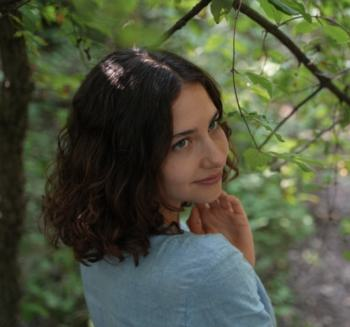
Asena Boyadzhieva holds a Master’s degree in Cognitive Science from the University of Vienna and a Bachelor’s degree in Biotechnology from IMC Krems. Her path has since moved from studying living systems in the laboratory to exploring them through the lived body. She is a certified social pedagogue, holistic dance facilitator and yoga teacher, and works at the intersection of embodiment, education, and art. Through The HeArt Center and coMetta, she creates experiential spaces where scientific and embodied ways of knowing can meet. Her work is rooted in the curiosity of what happens when we move beyond understanding the body as an object of study and begin to experience it as an active participant in perception, relationship and action. She is particularly interested in embodied resilience, collective processes and how we can cultivate the capacity to remain connected and responsive in times of complexity and uncertainty.
Affiliation: coMetta – Verein für ganzheitliches Lernen und nachhaltige innere Entwicklung
Homepage: theheartcenter.at