
Lecturer: Robert Porzel, Laura Spillner
Fields: Computational Linguistics
Content
1. Session 1 will introduce the branches of natural language processing pertinent to the rise of LLMS
2. Session 2 will introduce early language models and what they were used for
3. Session 3 will introduce common tasks, such as classification, that are handled by ML approaches
4. Session 4 will introduce embeddings and the types of neural networks that paved the way for LLMS
Literature
- Daniel Jurafsky and James H. Martin. 2026. Speech and Language Processing: An Introduction to Natural Language Processing, Computational Linguistics, and Speech Recognition with Language Models, 3rd edition. Online manuscript released August 19, 2026.
- https://web.stanford.edu/~jurafsky/slp3.
Lecturer
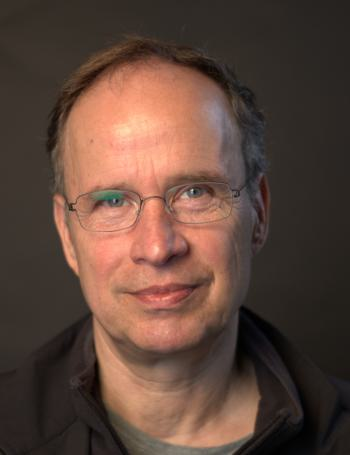
Throughout his studies Robert Porzel earned degrees in general linguistics, computational linguistics and computer science. Previous to his current work he worked in the interdisciplinary collaborative research center “Language and Situation” (SFB 245) and the special research program “Language Production” (SPP 1022) funded by the German Research Foundation (DFG). Thereafter, he worked at the European Media Laboratory (EML) on several natural language processing projects, i.e. DeepMap, Embassi, SmartKom and SmartWeb, which were funded by the Klaus Tschira Foundation (KTS) and the German Ministry for Education and Research (BmBF). In between he was a guest researcher at the University of California, Berkeley working on a formalization of embodied construction grammar in the EDU project. After moving to the University of Bremen, Robert Porzel started work on contextual computing for autonomous collaborative systems in the DFG-funded special research program “Autonomous Logistic Processes” (SFB 637). He initiated and chaired the biannual ScaNaLU workshop series on scalable natural language understanding systems (2002, 2004 and 2006) and was a member of the steering board of the Interdisciplinary College (IK) – an international spring school on cognitive science, neurosciences and AI – which he chaired in 2010 together with Natalie Sebanz and Manfred Spitzer. His current position is that of “Reader in Digital Media” at the University of Bremen and he researches in the collaborative research center “Everyday Activity Science and Engineering” (SFB 1320) on knowledge models for cognitive robotics.
Affiliation: University of Bremen
Homepage: https://www.uni-bremen.de/dmlab/team/dr-ing-robert-porzel
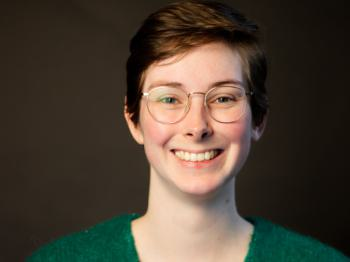
Laura Spillner is a doctoral researcher at the Digital Media Lab. She studied media science and digital media and then completed a master’s degree in computer science at the University of Bremen, with a focus on artificial intelligence, cognition and robotics. Her master’s thesis focused on natural language processing and conversational agents. Laura is working in the European Project “MUHAI: Meaning and understanding in Human-centered artificial intelligence”. In this project and in her PhD thesis she is researching natural language understanding, and the development of explainable algorithms AI and hybrid AI in the field of language processing.
Affiliation: Universität Bremen
Homepage: https://www.uni-bremen.de/en/dmlab/team/laura-spillner