There has been a paradigm change in views of the self. The self is no longer an abstract entity, situated or realized by our individual brains. It is seen as embodied instead and likely as being co-constituted through our relations and interactions with others. In this course we explore recent theories of selfhood stemming from the field of so-called embodied and enactive cognition. We will discuss the self both from a third-personal “objective” perspective (as a living entity) and from a first-personal, subjective perspective (as lived or experienced entity). An important question to be explored is the extent to which the embodied self should be seen as a genuinely social and relational phenomenon.
Literature
Di Paolo, E., Rohde, M., & De Jaegher, H. (2010). Horizons for the enactive mind: Values, social interaction, and play. In Enaction: Towards a new paradigm for cognitive science. MIT press
Gallagher, S. (2000). Philosophical conceptions of the self: implications for cognitive science. Trends in cognitive sciences, 4(1), 14-21.
Gallagher, S., & Daly, A. (2018). Dynamical relations in the self-pattern. Frontiers in psychology, 664.Heersmink, R. (2020). Varieties of the extended self. Consciousness and Cognition, 85, 103001.
Hutto, D. D., & Ilundáin-Agurruza, J. (2020). Selfless activity and experience: Radicalizing minimal self-awareness. Topoi, 39(3), 509-520.
Kyselo, M. (2014). The body social: an enactive approach to the self. Frontiers in Psychology, 5, 986.
Lindblom, J. (2020). A radical reassessment of the body in social cognition. Frontiers in Psychology, 11, 987.
Maiese, M. (2019). Embodiment, sociality, and the life shaping thesis. Phenomenology and the Cognitive Sciences, 18(2), 353-374.
Thompson, E. (2005). Sensorimotor subjectivity and the enactive approach to experience. Phenomenology and the cognitive sciences, 4(4), 407-427.
Lecturer
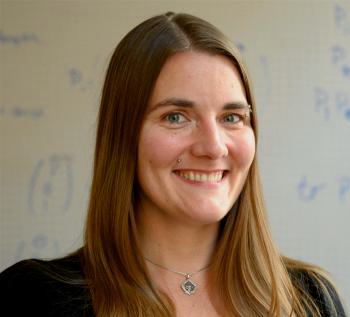
Miriam Kyselo is a philosopher and cognitive scientist. She received a PhD from the Institute of Cognitive Science University of Osnabrueck. Since 2020 she holds the position of Associate Professor at the Norwegian University of Science and Technology. Her expertise is in philosophy of cognition, especially the so-called 4E approaches (enacted, extended, embodied, embedded aspects of the mind), philosophy of psychology, as well as interdisciplinary research in embodied cognitive science.
Lecturer: Prof. Charles Spence Fields: gastrophysics
Content
Most of us are convinced that we can taste the food we eat, and directly savour the drinks that we consume. However, a growing body of gastrophysics research (Spence, 2017) demonstrates that the artefacts that we use to plate food on, drink in, and consume food with (think cutlery) exert far more of an impact on our experience of food and drink than any of us realise. Everything from the weight and material properties of the cutlery, through to the texture and visual appearance of plateware influence people’s perception of the taste/flavour of food. Chefs are starting to question how their guests interact with the food they prepare, and plateware designers are starting to develop neuroscience-inspired plateware. Looking to the future, it is intriguing to consider how digital technologies may increasingly come to modify (and hopefully enhance) the experience of food and drink. But can they (e.g., sensory apps) actually help to nudge people towards eating behaviours that are healthier for the individual, and more sustainable for the planet? Or do they merely entertain?
Literature
Spence, C. (2017). Gastrophysics: The new science of eating. London, UK: Viking Penguin.
Spence, C. (2022). Interacting with food: Tasting with the hands. International Journal of Gastronomy & Food Science, 30:100620. https://doi.org/10.1016/j.ijgfs.2022.100620.
Lecturer: Jan Smeddinck Fields: Human-Computer Interaction, Interaction Design, User Experience, Embodied Interaction, Human-AI Interaction, Tangible Interaction, Natural User Interfaces, Reality-Based Interaction, Multimodal Interaction, Augmented Reality, Virtual Reality, Digital Health
Content
With the realization of Weiser’s vision (Weiser, 1991) and computing becoming truly ubiquitous, pervading application areas including education, health, manufacturing, and many more, human-computer interaction (HCI) – or more generally speaking human-technology interaction – is more relevant than ever. Concepts that arguably originated in the melting-pot of HCI research have been adopted in many areas outside of research labs, including the formation of dedicated professional occupations, e.g. in user experience or interaction design. Looking at our co-existence and co-evolution with ubiquitous and pervasive technologies both at work and in our private lives, HCI as a research field addresses two key questions: I) How do we create/make/design/implement technologies that work well (or better) for people? and II) What does it do to people (individuals and groups) to be living and working so closely with these technologies? Clearly this necessitates in interdisciplinary angle that sits at the heart of HCI and resonates well with the IK interdisciplinary college in combining foundations from computing, psychology, sociology and further fields with technology and societal developments. Across three sessions, the course will provide considerations based on lecturing, discussion and practical elements around human-technology interaction concerning a) minds, b) bodies) and c) things, emphasizing the dynamics of experience that arise when using interactive systems. These elements are arguably important to consider as we turn to recognize that technological progress increasingly does not only concern technological artifacts separately from (or independently of) human beings as the other main subject of study in HCI. Following on ideas of digital tools as extensions of our bodies (McLuhan & Lapham, 1994), recent developments in genetics, implanted technologies and brain-computer interfaces clearly indicate the relevance of beginning to understand humans as augmented beings in complex – often quite literally integrated (Mueller et al., 2020) and ever more rapidly changing – interplay with technologies. In parallel, agent systems and conversational interfaces are becoming more commonplace and frequent interaction partners, enabled by considerable advances in machine learning and artificial intelligence. In the light of the innate human tendency to anthropomorphize, this clearly warrants approaches to HCI development and research that are deeply informed by psychological and sociological theory and methodology. These observations indicate important directions for further socio-digital research in exciting emerging avenues for HCI, particularly around application areas such as digital health and wellbeing, and with stakeholder groups who could greatly benefit from enabling and empowering human-augmentation and technologies, such as older adults. However, in the light of the already considerably challenging impact of relatively loosely coupled technologies, such as social media consumed largely through hand-held personal devices, these developments must also be studied and understood with a critical perspective on the potential dangers and entailing radical societal changes. How to sustain and improve inclusive and equitable technology design in such complex scenarios is an important research motif.
Literature
General Reading:
Dix, A., Finlay, J., Abowd, G. D., & Beale, R. (2003). Human-Computer Interaction (3 edition). Prentice Hall.
Dourish, P. (2001). Where the Action Is: The Foundations of Embodied Interaction. The MIT Press.
Höök, K. (2018). Designing with the Body: Somaesthetic Interaction Design. The MIT Press.
Moggridge, B. (2006). Designing Interactions. MIT Press.
Sharp, H., Preece, J., & Rogers, Y. (2019). Interaction Design: Beyond Human-Computer Interaction (5th edition). John Wiley & Sons.
McLuhan, M., & Lapham, L. H. (1994). Understanding Media: The Extensions of Man (Reprint edition). The MIT Press.
Mueller, F. F., Lopes, P., Strohmeier, P., Ju, W., Seim, C., Weigel, M., Nanayakkara, S., Obrist, M., Li, Z., Delfa, J., Nishida, J., Gerber, E. M., Svanaes, D., Grudin, J., Greuter, S., Kunze, K., Erickson, T., Greenspan, S., Inami, M., … Maes, P. (2020). Next Steps for Human-Computer Integration. Proceedings of the 2020 CHI Conference on Human Factors in Computing Systems, 1–15. https://doi.org/10.1145/3313831.3376242
Weiser, M. (1991). The computer for the 21st century. Scientific American, 265(3), 94–104.
Further reading:
Buolamwini, J., & Gebru, T. (2018). Gender Shades: Intersectional Accuracy Disparities in Commercial Gender Classification. Proceedings of the 1st Conference on Fairness, Accountability and Transparency, 77–91. https://proceedings.mlr.press/v81/buolamwini18a.html
Qian Yang, Aaron Steinfeld, Carolyn Rosé, & John Zimmerman. (2020). Re-examining Whether, Why, and How Human-AI Interaction Is Uniquely Difficult to Design. Proceedings of the 2020 CHI Conference on Human Factors in Computing Systems, 1–13. https://doi.org/10.1145/3313831.3376301
Lecturer
Jan Smeddinck is currently a Principal Investigator at – and the Co-Director of – the Ludwig Boltzmann Institute for Digital Health and Prevention (LBI-DHP) in Salzburg, Austria. For the LBI-DHP, he leads research programme lines on digital health applications and data analytics. Prior to this appointment he was a Lecturer (Assistant Professor) in Digital Health at Open Lab and the School of Computing at Newcastle University in the UK to which he retains a visiting association. He also spent one year as a postdoc visiting research scholar at the International Computer Science Institute (ICSI) in Berkeley and his PhD alma mater is the TZI Digital Media Lab at the University of Bremen in Germany. Building on his background in interaction design, serious games, web technologies, human computation, machine learning, and visual effects, he has found a home in the research field of human-computer interaction (HCI) research with a focus on digital health.
Lecturer: Dr. Rebecca Böhme Fields: Neuroscience, Psychology, Philosophy
Content
Social touch is one of the earliest ways to experience the own body and the presence of others in the world around us. Therefore, the social other is inherently intertwined with our bodily self perception. Despite the primacy of touch as a social communication channel, social touch has not received much attention in neuroscientific and psychological research. While vision and audition – both distance senses – are by now quite well understood, the tactile sense and especially its social aspects are being investigated in more depth only in recent years. In this course, we will discuss the neurobiological processing of tactile perceptions, social tactile communication, the contribution of social touch to perceiving the own body and to developing a sense of self, and philosophical and ethical implications with a special focus on the covid pandemic and on the digitalization of social interactions. It will incorporate different teaching formats (lecture, group work, practical experience for those comfortable with touch to the arms).
Literature
Ciaunica, A., Constant, A., Preissl, H., & Fotopoulou, K. (2021). The first prior: from co-embodiment to co-homeostasis in early life. Consciousness and cognition, 91, 103117.
Boehme, R., Hauser, S., Gerling, G. J., Heilig, M., & Olausson, H. (2019). Distinction of self-produced touch and social touch at cortical and spinal cord levels. Proceedings of the National Academy of Sciences, 116(6), 2290-2299.
Boehme, R., & Olausson, H. (2022). Differentiating self-touch from social touch. Current Opinion in Behavioral Sciences, 43, 27-33.
Boehme, R., Karlsson, M. F., Heilig, M., Olausson, H., & Capusan, A. J. (2020). Sharpened self-other distinction in attention deficit hyperactivity disorder. NeuroImage: Clinical, 27, 102317.
Fotopoulou, A., & Tsakiris, M. (2017). Mentalizing homeostasis: The social origins of interoceptive inference. Neuropsychoanalysis, 19(1), 3-28.
Frost-Karlsson, M., Capusan, A. J., Perini, I., Olausson, H., Zetterqvist, M., Gustafsson, P. A., & Boehme, R. (2022). Neural processing of self-touch and other-touch in anorexia nervosa and autism spectrum condition. NeuroImage: Clinical, 103264.
Fuchs, T. (2011). The brain–A mediating organ. Journal of Consciousness studies, 18(7-8), 196-221.
McGlone, F., Wessberg, J., & Olausson, H. (2014). Discriminative and affective touch: sensing and feeling. Neuron, 82(4), 737-755.
Lecturer
Dr. Rebecca Böhme is an assistant professor and principle investigator at the Center for Social and Affective Neuroscience in Linköping, Sweden. She is interested in how we establish a bodily self, how we connect with each other, and what happens to the self in psychiatric conditions. Her labs studies body perception and self-other-distinction in states of an altered sense of self. Dr. Böhme studied at Heidelberg University and at the Max Planck research school in Tübingen. For her PhD at Humboldt University & Charité Berlin, she received the For Women in Science Award.
Affiliation: Center for Social and Affective Neuroscience, Linköping University Homepage:https://rebeccaboehme.com/
Lecturer: Judith Simon Fields: Philosophy/Ethics of AI, Philosophy & Ethics of Technology
Content
In this course, I will provide a short introduction into philosophy and ethics of technology, including the role of values in design. I will focus in particular on epistemological, ethical and political questions arising ariding in the context of big data analytics and artificial intelligence.
Angwin, J., Larson, J., Mattu, S. and Kirchner, L. (2016, Mai 23). Machine Bias: There’s software used across the country to predict future criminals. And it’s biased against blacks. ProPublica.
Boyd, D. and Crawford, K. (2012). Critical Questions for Big Data: Provocations for a Cultural, Technological, and Scholarly Phenomenon. Information, Communication, & Society 15(5), 662-679.
Busch, L. (2016). Looking in the Wrong (La)place? The Promise and Perils of Becoming Big Data. Science, Technology & Human Values 42(4), 657 – 678. https://doi.org/10.1177/0162243916677835
Keyes, O., et al. (2019). A Mulching Proposal: Analysing and Improving and Algorithmic System for Turning the Elderly into High-Nutrient Slurry. CHI 2019, Glasgow, ACM.
Kitchin, R. (2014). Big Data, New Epistemologies and Paradigm Shifts. Big Data & Society, 1(1).
Latour, B. (1992). Where Are the Missing Masses? The Sociology of a Few Mundane Artifacts. Shaping Technology/Building Society: Studies in Sociotechnical Change. W. E. Bijker and J. Law. Cambridge, MIT Press: 225-258.
Leonelli, S. (2014). What difference does quantity make? On the epistemology of Big Data in biology. Big Data & Society, 1(1). https://doi.org/10.1177/2053951714534395
Moor, J. H. (1985). “What is computer ethics?” Metaphilosophy 16(4): 266-279
Nissenbaum, H. (2005). Values in Technical Design. In Mitcham, C. (Hrsg.), Encyclopedia of Science, Technology and Ethics, lxvi- lxx. New York: Macmillan.
Winner, L. (1980). “Do Artifacts Have Politics?” Daedalus 109(1): 121-136.
Lecturer
Judith Simon is Full Professor for Ethics in Information Technologies at the Universität Hamburg. She is interested in ethical, epistemological and political questions arising in the context of digital technologies, in particular in regards to big data and artificial intelligence. Judith Simon is a member of the German Ethics Council as well as various other committees of scientific policy advice and has also been a member of the Data Ethics Commission of the German Federal Government (2018-2019). Her Routledge Handbook of Trust and Philosophy has been published in June 2020.
Lecturer: Krzysztof Dolega Fields: Philosophy of Mind, Cognitive Science, Computational Neuroscience
Content
The proposal that probabilistic inference and unconscious hypothesis testing are central to information processing in the brain has been steadily gaining ground in cognitive neuroscience and associated fields. One popular version of this proposal is the new theoretical framework of action-oriented predictive coding or predictive processing, which couples the idea of unconscious perceptual inference with that of ‘active inference’ in which inference and predictive control are applied to action. Together, the two kinds of inference are claimed to offer a unified and exhaustive account of perception and cognition.
The aim of this course is to investigate and evaluate the validity of claims about the explanatory power and credentials of predictive processing. We will explore different interpretations of predictive processing and ask whether the framework supports a representational understanding of cognition or whether it steers cognitive science towards a more enactive approach to mind and life. Finally, we will also try to scrutinize the explanatory scope and the level of analysis on which the framework tries to answer questions about cognition.
Literature
Bruineberg, J., Kiverstein, J., & Rietveld, E. (2018). The anticipating brain is not a scientist: the free-energy principle from an ecological-enactive perspective. Synthese, 195(6), 2417-2444. https://doi.org/10.1007/s11229-016-1239-1
Krzysztof Dolega is a postdoc and a member of the situated cognition research group at the Ruhr-Universität Bochum. He has just completed a one and a half year long Volkswagen Stiftung funded grant on the psychology and epistemology of conspiracy theories entitled “Why do people believe weird things: Bayesian brain, conspiracy theories, and epistemic vices”. His doctoral research was also conducted at the Ruhr-Universität, where he was supervised by Tobias Schlicht and Daniel Dennett. Krzysztof was awarded a PhD in Philosophy with a grade of summa cum laude in May 2019. This work was also distinguished by the GfD with the annual prize for the best interdisciplinary dissertation. Krzysztof has published over 15 academic papers and book chapters. Together with Jelle Bruineberg, Joe Dewhurst, and Manuel Baltieri, he is the co-author of the recent Behavioral & Brain Sciences target article “The Emperor’s New Markov Blankets”, which has just appeared in print together with 35 commentaries and a reply from the authors. He has also co-edited a collection of articles on representational explanations by leading researchers titled “Mental Representations: The Foundation of Cognitive Science” (OUP, 2020).
Echolocation is one of the most amazing human sensory perceptions. While sighted people purposefully tune out reflected sound waves, blind people have learned to extract all kinds of information from the echoes. To do this, the brain must generate a processing center in which the size, location, material, and density of surrounding surfaces are represented. It has been scientifically proven that the area of experienced echo sounders is located in the visual cortex and not in the auditory center, which should not be surprising because of the information to be processed. Can sighted people also learn this technique? How does it feel when the brain builds a new sensory center? How does one program their own brain to process previously hidden sensory perceptions? The course “Echolocation” addresses these questions in a very practical way. Participants learn the basics of the “click sonar” technique (75%) and the theory behind it (25%). The course takes place to a large extent blindfolded. Since we try to intervene as effectively as possible in processing patterns of sensory perceptions, side effects such as elation, migraine or dreams cannot be excluded. No guarantee of consciousness enhancement.
Lecturer
Susan Wache studied Cognitive Science at the University of Osnabrück. She worked in the Research Group feelSpace that investigates human senses and works especially with Compass Belts. In 2015 two colleagues from the same group and herself as CMO founded the startup feelSpace that develops and sells naviBelts, tactile navigation devices especially for the visually impaired.
Julia Wache studied Cognitive Science in Vienna and Potsdam. She finished her PhD in Trento working on the Emotion Recognition via physiological signals and mental effort in the context of using a tactile belt for orientation. In parallel she participated in the EIT Digital doctoral program to learn entrepreneurial skills. In 2016 she joined the feelSpace GmbH as Head of Marketing. Since feelSpace provides aids for independent mobility of blind people she learned about echo location in this context.
Stephan Drechsel
Stephan Drechsel runs a rehabilitation practice for visually impaired and blind persons near Ulm. An important part of his work is to teach blind people echolocation skills. In 2016 he learned active echolocation himself as a sighted person. Since then he has been training sighted colleagues as well as blind students how to use flashsonar, which produces visual images by sound.
Lecturer: Christian Faubel Fields: Arts, Sonic Arts, Dynamical Systems, Robotics,
Content
In my lecture I critically examine differences between the digital and the analog, which become especially visible in the phenomenon of synchronization. In the lecture I experiment with different analog systems and demonstrate their utopian potential, which I locate especially in the hierarchy-free communication between these systems and I show how polyrhythms emerge from hierarchy-free interaction.
Lecturer
Christian Faubel is an interdisciplinary scholar working in the differing fields of neuroscience, autonomous systems research and media art & design. He holds a PhD in electrical engineering and has completed research on autonomous systems at the Institute for Neural Computation from 2002–2012. From 2012-2018 he was working as artist, researcher and teacher at the academy of media arts cologne. Since 2020 he holds a position as professor for smart connected products at the university of applied sciences cologne, where he teaches in the new bachelor program code & context.
Lecturer: Gabriela Markova Fields: developmental psychology, social cognition, music
Content
The goal of this lecture series is to explore whether and how social engagements with others play a directional role for the emergence of cognitive phenomena. Taking a developmental perspective, I will present evidence from research on interpersonal synchrony, music, and play, and highlight novel methodological approaches to study cognition in a natural context. I will argue that by understanding the developmental and neurobiological complexities of social engagements with others will give us an exclusive insight into the making of children’s understanding of the world.
Literature
D’Ausilio, A., Novembre, G., Fadiga, L., & Keller, P. E. (2015). What can music tell us about social interaction? Trends in Cognitive Sciences, 19, 111-114. https://doi.org/10.1016/j.tics.2015.01.005
De Jaegher, H., Di Paolo, E., & Gallagher, S. (2010). Can social interaction constitute social cognition? Trends in Cognitive Science, 14, 441-447. https://doi.org/10.1016/j.tics.2010.06.009
Hoehl, S., & Markova, G. (2018). Moving developmental social neuroscience toward a second-person approach. PLoS Biology, 16(12), e3000055. https://doi.org/10.1371/journal.pbio.3000055
Markova, G., Nguyen, T., & Hoehl, S. (2019). Neurobehavioral interpersonal synchrony in early development: The role of interactional rhythms. Frontiers in Psychology, 10, 2078. https://doi.org/10.3389/fpsyg.2019.02078
Mayo, O., & Gordon, I. (2020). In and out of synchrony – Behavioral and physiological dynamics of dyadic interpersonal coordination. Psychophysiology, 57(6), e13574. https://doi.org/10.1111/psyp.13574
Novembre, G., & Iannetti, G. D. (2021). Hyperscanning alone cannot prove causality. Multi-brain stimulation can. Trends in Cognitive Sciences, 25, 96-99. https://doi.org/10.1016/j.tics.2020.11.003
Reddy, V. (2008). How infants know minds. Harvard University Press.
Trehub, S. E. (2018). The musical infant. In D. J. Lewkowicz & R. Lickliter (Eds.),
Conceptions of development: Lessons from the laboratory (pp. 231-257). Psychology Press.
Lecturer
Gabriela Markova
Gabriela Markova, Ph.D., is a researcher at the Department of Developmental and Educational Psychology at University of Vienna. Dr. Markova holds a Ph.D. in psychology from York University, Toronto, Canada, and a Mag. from University of Salzburg. In her research she investigates early socio-emotional and -cognitive development applying various methods, including behavioural and endocrinological analyses, EEG and eye tracking. Dr. Markova is particularly interested in the meaning, structures and functions of early social interactive processes as well as the clinical relevance of social cognition. She has also served as head of research of Red Noses International, where she initiated research activities focused on the effectiveness of healthcare clown interventions.
Lecturer: Terry Stewart Fields: Computational Neuroscience / Neuromorphic Computing
Content
While the brain does perform some sort of computation to produce cognition, it is clear that this sort of computation is wildly different from traditional computers, and indeed also wildly different from traditional machine learning neural networks. In this course, we identify the type of computation that biological neurons are good at (in particular, dynamical systems), and show how to build large-scale neural models that compute basic aspects of cognition (sensorimotor, memory, symbolic reasoning, action selection, learning, etc.). These models can either be made to be biologically realistic (to varying levels of detail) or mapped onto energy-efficient neuromorphic hardware.
Literature
Eliasmith, C. and Anderson, C. (2003). Neural engineering: Computation, representation, and dynamics in neurobiological systems. MIT Press, Cambridge, MA.
Eliasmith, C. et al., (2012). A large-scale model of the functioning brain. Science, 338:1202-1205.
Kajić, I. et al., (2017). A spiking neuron model of word associations for the remote associates test. Frontiers in Psychology, 8:99.
Stöckel, A. et al., (2021). Connecting biological detail with neural computation: application to the cerebellar granule-golgi microcircuit. Topics in Cognitive Science, 13(3):515-533.
Lecturer
Terry Stewart is a Senior Research Officer at the National Research Council Canada, after receiving his PhD in Cognitive Science at Carleton University and ten years as a post-doc in the Centre for Theoretical Neuroscience at the University of Waterloo. His research is on how neural systems compute, involving both building large-scale neural simulations of cognitive behaviour and the implementation of these model in energy-efficient neuromorphic hardware.