SC4 – Bionic Prosthetics in Medicine and Technology

Lecturer: Cosima Prahm
Fields: Medicine/Neuroscience/Machine Learning

Content

Although the hand represents only 1% of our body weight, most of our sensorimotor cortex is associated with its control. The loss of a hand therefore not only signifies the loss of the most important tool with which we can interact with our environment, but also leaves us with a drastic sensory-motor deficit that challenges our central nervous system. Restoring hand function is therefore not only an essential part of restoring physical integrity and functional employability, but also closes the neural circuit, thereby reducing phantom sensations and nerve pain.

When there is no longer sufficient anatomy to restore meaningful function, we can resort to complex robotic replacements whose functional capabilities in some respects even surpass biological alternatives, such as conservative reconstructive measures or transplantation of a hand. However, as with replantation and transplantation, the challenge with bionic robotic replacements is to solidly attach it the skeleton and connect the prosthesis to our neural and muscular system to achieve natural, intuitive control and also provide basic sensory feedback.

This interdisciplinary course will discuss the progressive development of upper extremity robotic prosthetics in the fields of bioengineering, medicine, computer science, and neuroscience. We address the medical basis of biosignals, movement, amputation and restoration, and various systems of prosthetic limbs to restore physical integrity. We will discuss enhancement versus restoration and how to improve the man-machine-interface, exemplified with case studies.

Literature

  • Aszmann, O. C., & Farina, D. (2021). Bionic Limb Reconstruction. In O. C. Aszmann & D. Farina (Eds.), Bionic Limb Reconstruction (1st ed.). Springer International Publishing. https://doi.org/10.1007/978-3-030-60746-3
  • Prahm, C., Daigeler, A., & Kolbenschlag, J. (2021). Bionische Rekonstruktion der oberen Extremität. In Plastische Chirurgie (3rd ed., pp. 135–145). Kaden.
  • Bressler, M., Merk, J., Heinzel, J., Butz, M. V., Daigeler, A., Kolbenschlag, J., & Prahm, C. (2022). Visualizing the Unseen: Illustrating and Documenting Phantom Limb Sensations and Phantom Limb Pain With C.A.L.A. Frontiers in Rehabilitation Sciences, 3(February), 1–11. https://doi.org/10.3389/fresc.2022.806114
  • Prahm, C., Schulz, A., Paaben, B., Schoisswohl, J., Kaniusas, E., Dorffner, G., Hammer, B., & Aszmann, O. (2019). Counteracting Electrode Shifts in Upper-Limb Prosthesis Control via Transfer Learning. IEEE Transactions on Neural Systems and Rehabilitation Engineering, 27(5), 956–962. https://doi.org/10.1109/TNSRE.2019.2907200

Lecturer

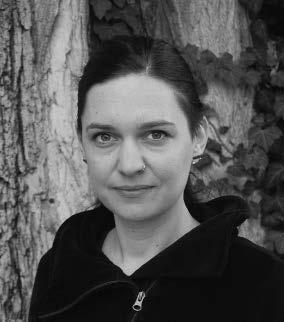
Cosima Prahm received her PhD in Medicine – Clinical Neuroscience at the Clinical Laboratory for Bionic Extremity Reconstruction at the Medical University of Vienna, Austria. Since 2019 she is heading the Research Laboratory for Advanced Reconstruction, Regeneration and Rehabilitation of Extremities at the department for Hand, Plastic, Reconstructive and Burn Surgery at the University Clinic of Tuebingen/BG Hospital, Germany. Her research focus includes the improvement of human machine interfaces for upper extremity amputees, nerve regeneration, organ on a chip and virtual rehabilitation in XR environments.

Affiliation: BG Hospital, University Clinic of Tuebingen, Department for Hand, Plastic, Reconstructive and Burn Surgery
Homepage: https://www.bg-kliniken.de/klinik-tuebingen/fachbereiche/detail/rekonstruktive-chirurgie/
PC1 – Hands-on tutorial on Dynamic Field Theory

Lecturer: Daniel Sabinasz, Raul Grieben, Gregor Schöner
Fields: Cognitive Science, Neural modeling

Content

YOU WILL NEED TO BRING YOUR OWN COMPUTER FOR THIS COURSE!

Dynamic Field Theory (DFT) provides a mathematical framework in which the emergence of cognition from its sensorimotor grounding can be understood. The activation dynamics of neural populations are organized as strongly recurrent neural networks that stabilize neural representations. Instabilities generate state transitions from which sequences of mental and motor acts emerge.
The tutorial will introduce the core concepts of DFT, while providing hands-on exercises and projects that make use of these concepts to build models of grounded cognition. We will discuss how DFT relates to other approaches to cognition.

Literature

  • Schöner, G.: Dynamical Systems Approaches to Cognition. In: Sun, R (ed.): The Cambridge Handbook of Computational Psychology. 2nd Edition. Cambridge University Press (in press).
  • (We will make a pre-print available).
  • See dynamicfieldtheory.org for more resources

Lecturer

Daniel Sabinasz is a Doctoral Student at the Institute for Neural Computation (INI) at the Ruhr-University Bochum focussed on using DFT to account for higher cognition. His training is in computer science and cognitive science.

Raul Grieben is a Doctoral Student at the INI focussed on a neural dynamic account for visual search. His training is in applied computer science.

Gregor Schöner holds the chair for Theory of Cognitive Systems at the INI. His broad interdisciplinary profile touches movement science, visual psychophysics, cognitive science, neuroscience, and cognitive robotics. .He has held academic positions in the US, France, and Germany, has been funded through German, French, European, and US funding agencies, and has published over 270 scientific articles.

Affiliation: Ruhr-University Bochum
Homepage: https://www.ini.rub.de/

SC16 – Mind, Body, Material: The art and design of sense-making

Lecturer: Claudia Muth
Fields: Cognitive Science, Design, Art, Psychology

Content

Embodied and enactive approaches in cognitive science emphasize that perception and cognition are strongly connected to the body, its motion, organization, precariousness and needs. Here, action is no consequence of representing and processing an input. Instead, it is part of sensorimotor patterns and can even embody knowledge, as when we move our fingers to count. Both cognition and action are deeply embedded in a *designed* environment – they are interwoven with material as well as social structures: e.g., tools limit or expand our reach, strength and precision, clothing enables or restricts postures and architecture shapes movement, orientation and perspective but also social encounters and hierarchies. However, such affordances are never preset: Sense-making and behavior can be said to emerge dynamically out of the individual and culturally scaffolded entanglement between mind, body and material. In this course, we explore the role of design for cognition, the materiality of creative processes and the destabilizing potential of art.

The Design of Sense-Making: Materials as Co-Creators

When we interact with or transform materials and things in order to get something into view, create form or reach a goal, we use the world as a resource (Clark, 2016). Meanwhile, it seems that we not only externalize cognitive processes by that. Material encounters might be linked with cognition more fundamentally: A notebook is not only part of one’s memory as it stores contents, but part of a memory process that is different from remembering without a notebook (flipping pages, reading, recognizing marks…) – Material-Engagement-Theory suggests that materials and things even co-determine cognitive and creative processes (Malafouris, 2013). We might thus say that the “design” of things, spaces and situations provides a structure that is deeply intertwined with action and cognition. And “to design” refers to a process of transformation that might be thoroughly grounded in material qualities.

The Art of Sense-Making: The Pleasure of Instability

When engaging with art, we might sometimes even become aware of our own habits of active sense making: artistic means of disruption can be “Strange Tools” (Nöe, 2015) by which we investigate ourselves. When experiencing multistability, ambivalence, uncertainty or indeterminacy, instabilities in sense-making might furthermore cause specific affective dynamics beyond the pleasure of familiarity (Muth & Carbon, 2022; Muth, Hesslinger & Carbon, 2018). In these cases, we might rather be driven by the open-ended activity of sense-making itself than by the resolution of ambiguity.

This course

In this course we will discuss theoretical accounts of the relationship between mind, body and material as well as the crucial role of design in shaping this entanglement. We will actively explore the role of materials for creative processes and the potential of art to provide experiential access to our own active sense-making.

Literature

  • Clark, A. (2016). Surfing Uncertainty — Prediction, Action and the Embodied Mind. Oxford, New York: Oxford University Press.
  • Malafouris, L. (2013). How things shape the mind. A Theory of Material Engagement. Cambridge, London: The MIT Press.
  • Muth, C. & Carbon, C. C. (2022). Ambivalence of artistic photographs stimulates interest and the mo-tivation to engage. Psychology of Aesthetics, Creativity, and the Arts. Advance online publication. doi: 10.1037/aca0000448
  • Muth, C., Hesslinger, V. M., & Carbon, C. C. (2018). Variants of semantic instability (SeIns) in the arts: A classification study based on experiential reports. Psychology of Aesthetics, Creativity, and the Arts, 12(1), 11-23. doi: 10.1037/aca0000113
  • Nöe, A. (2015). Strange tools: Art and human nature. New York: Farrar, Straus and Giroux.

Lecturer

Claudia Muth

Claudia Muth is a cognitive scientist and perception researcher with a background in fine arts and design. She worked as a researcher and lecturer at the University of Bamberg and for a hands-on museum on perception based in Nuremberg. Her main interest concerns the experience of disordered, ambiguous or indeterminate situations, artistic research as well as enactive approaches to design. Currently, she holds a substitute professorship for “Psychology of Design” at the Burg Giebichenstein University of Art and Design Halle.

Affiliation: Psychology of Design, Burg Giebichenstein University of Art and Design, Halle, Germany
Homepage: https://www.uni-bamberg.de/allgpsych/alumni/claudia-muth/

SC7 – The neural dynamics of visual working memory

Lecturer: Prof. John Spencer
Fields: psychology, cognitive science, developmental science, neuroscience

Content

I will present a line of work exploring the neural dynamics underlying visual working memory — a core cognitive system used to detect changes in the world, keeping cognition anchored to the visual surrounds. I will first introduce the key concepts of Dynamic Field Theory. Next, I will present our theory of visual working memory. Subsequent lectures will show how we have tested and extended this theory in the areas of adult cognition and human development, including how we have embedded the theory in larger cognitive architectures. I will also discuss how we have tested the neural dynamic details of the theory using fMRI.

Literature

  • Buss, A.T., Magnotta, V., Penny, W., Schöner, G., Huppert, T. & Spencer, J.P. (2021). How do neural processes give rise to cognition? Simultaneously predicting brain and behavior with a dynamic model of visual working memory. Psychological Review, http://dx.doi.org/10.1037/rev0000264.
  • Spencer, J. P. (2020). The development of working memory. Current Directions in Psychological Science, doi/10.1177/0963721420959835.
  • Delgado Reyes, L.M., Wijeakumar, S., Magnotta, V.A., Forbes, S.H. & Spencer, J.P. (2020). The functional brain networks that underlie visual working memory in the first two years of life. NeuroImage, 219, https://doi.org/10.1016/j.neuroimage.2020.116971.
  • Perone, S. & Spencer, J.P. (2013). Autonomous visual exploration creates developmental change in familiarity and novelty seeking behaviors. Frontiers in Psychology, 4, Article 648.
  • Perone, S. & Spencer, J.P. (2013). Autonomy in action: Linking the act of looking to memory formation in infancy via dynamic neural fields. Cognitive Science, 37, 1-60.
  • Perone, S., Simmering, V.R. & Spencer, J.P. (2011). Stronger neural dynamics capture changes in infants’ visual short-term memory capacity over development. Developmental Science, 14, 1379-1392.
  • Johnson, J.S., Spencer, J.P., & Schöner, G. (2009). A layered neural architecture for the consolidation, maintenance, and updating of representations in visual working memory. Brain Research, 1299, 17-32.
  • Johnson, J.S., Spencer, J.P., Luck, S.J., & Schöner, G. (2009). A dynamic neural field model of visual working memory and change detection. Psychological Science, 20, 568-577.

Lecturer

John Spencer

John P. Spencer is a Professor of Psychology at the University of East Anglia in Norwich, UK. Prior to arriving in the UK, he was a Professor of Psychology at the University of Iowa and served as the founding Director of the Delta Center (Development and Learning from Theory to Application). He received a Sc.B. with Honors from Brown University in 1991 and a Ph.D. in Experimental Psychology from Indiana University in 1998. He is the recipient of the Irving J. Saltzman and the J.R. Kantor Graduate Awards from Indiana University, the 2003 Early Research Contributions Award from the Society for Research in Child Development, and the 2006 Robert L. Fantz Memorial Award from the American Psychological Foundation. His research examines the development of visuo-spatial cognition, word learning, working memory, attention, and executive function with an emphasis on dynamical systems and dynamic field models of cognition and action. He has had continuous funding from the US National Institutes of Health and the US National Science Foundation since 2001 and has been a fellow of the American Psychological Association since 2007. He is currently leading a new initiative on infant brain health in India funded by the Bill & Melinda Gates Foundation.

Affiliation: University of East Anglia
Homepage: https://ddlabs.uea.ac.uk/

BC4 – Philosophy of Cognition (Cancelled)

Lecturer: Sven Walter
Fields: Philosophy

UNFORTUNATELY, BC4 HAD TO BE CANCELLED.

Content

The four lectures will cover the changes that the concept of cognition seems to have undergone since the 1960, starting with the computer model of the mind, then covering connectionism and dynamicism and finally discussing modern approaches that have been suggested under such headings as embodiment, enactivism, extended mind etc.

Lecturer

Sven Walter studied philosophy at Bonn and Ohio State University. He received his PhD in 2005, since 2007 he is professor for philosophy of mind and cognition.

Affiliation: Institute of Cognitive Science, Osnabrück University

SC9 – Grounded Mental Representations

Lecturer: Gottfried Vosgerau
Fields: Philosophy of Mind, Philosophy of Cognition

Content

Although Cognitive Science started as an interdisciplinary approach to the mind based on the concept of mental representations, mental representations are much debated in the current literature. In this course, we will first look at arguments why mental representations are still necessary for truly causal explanations of behavior. We will also discuss what mental representations are not and which shortcomings of classical definitions should be abandoned. One critical issue concerns the question of how mental representations come into place and how they acquire their content. We will discuss ideas that propose specific transitions from action control to simple mental representations to concepts.

Literature

  • Egan, F. (2020): “A Deflationary Account of Mental Representation”, in J. Smortchkova, K. Dołęga, and T. Schlicht (eds.): What are Mental Representations?, Oxford University Press, 26–54.
  • Gentsch, A.; Weber, A.; Synofzik, M.; Vosgerau, G. & Schütz-Bosbach, S. (2016): „Towards a common framework of grounded action cognition: Relating motor control perception and cognition“, Cognition 146, 81-89.
  • Newen, A. & Vosgerau, G. (2020): “Situated Mental Representations: Why we need mental representations and how we should understand them”, in J. Smortchkova, K. Dołęga, and T. Schlicht (eds.): What are Mental Representations?, Oxford University Press, 178–212.
  • Ramsey, W. M. 2017. Must Cognition Be Representational? Synthese 194 (11): 4197–4214.
  • Vosgerau, G., Seuchter, T., Petersen, W., (2015), “Analyzing Concepts in Action-Frames”, in: T. Gamerschlag, R. Osswald, W. Petersen (eds.): Meaning, Frames, and Conceptual Representation, Studies in Language and Cognition. Düsseldorf University Press, Düsseldorf; S.293-310.
  • Weber, A. & Vosgerau, G. (2012), „Grounding Action Representations“, Review of Philosophy and Psychology 3, 53-69.

Lecturer

Prof. Dr. Gottfried Vosgerau received his PhD in Philosophy in 2007 with a dissertation on mental representation. He is professor for Philosophy of Mind and Cognition at the Heinrich-Heine-University Düsseldorf since 2019. His main research interests include mental representations, other mental entities and their role in the explanation of behavior, the relation between thought and language, and the philosophical implications of mental disorders.

Affiliation: Heinrich-Heine-Universität Düsseldorf
Homepage: https://www.philosophie.hhu.de/personal/philosophie-vi-philosophie-des-geistes-und-der-kognition

SC3 – Investigating motor control circuits using neuromechanical simulations and robots

Lecturer: Auke J. Ijspeert
Fields: Robotics, Computational neuroscience

Content

The ability to efficiently move in complex environments is a fundamental property both for animals and for robots, and the problem of locomotion and movement control is an area in which neuroscience, biomechanics, and robotics can fruitfully interact. In this talk, I will present how biorobots and numerical models can be used to explore the interplay of the four main components underlying animal locomotion, namely central pattern generators (CPGs), reflexes, descending modulation, and the musculoskeletal system. Going from lamprey to human locomotion, I will present a series of models that tend to show that the respective roles of these components have changed during evolution with a dominant role of CPGs in lamprey and salamander locomotion, and a more important role for sensory feedback and descending modulation in human locomotion. Furthermore, the models suggest that there is an interesting redundancy between sensory feedback loops and CPGs that provide strong robustness against neural lesions. If time allows, I will also present a project showing how robotics can provide scientific tools for paleontology.

Literature

  • Ijspeert, A. J. (2014). Biorobotics: Using robots to emulate and investigate agile locomotion. Science, 346(6206), 196–203. https://doi.org/10.1126/science.1254486
  • Ryczko, D., Simon, A., & Ijspeert, A. J. (2020). Walking with Salamanders: From Molecules to Biorobotics. Trends in Neurosciences, 43(11), 916–930. https://doi.org/10.1016/j.tins.2020.08.006
  • Thandiackal, R., Melo, K., Paez, L., Herault, J., Kano, T., Akiyama, K., Boyer, F., Ryczko, D., Ishiguro, A., & Ijspeert, A. J. (2021). Emergence of robust self-organized undulatory swimming based on local hydrodynamic force sensing. Science Robotics, 6(57), eabf6354. https://doi.org/10.1126/scirobotics.abf6354

Lecturer

Auke Ijspeert

Auke Ijspeert is a professor at EPFL (the Swiss Federal Institute of Technology in Lausanne, Switzerland), IEEE Fellow, and head of the Biorobotics Laboratory (https://www.epfl.ch/labs/biorob). He has a B.Sc./M.Sc. in physics from the EPFL (1995), and a PhD in artificial intelligence from the University of Edinburgh (1999). His research interests are at the intersection between robotics and computational neuroscience. He is interested in using numerical simulations and robots to gain a better understanding of animal locomotion and movement control, and in using inspiration from biology to design novel types of robots and locomotion controllers (see for instance Ijspeert et al, Science, Vol. 315, 2007 and Ijspeert, Science Vol. 346, 2014). He is also interested in assisting persons with limited mobility using exoskeletons and assistive furniture. With his colleagues, he has received paper awards at ICRA2002, CLAWAR2005, IEEE Humanoids 2007, IEEE ROMAN 2014, CLAWAR 2015, and CLAWAR 2019. He is associate editor for the International Journal of Humanoid Robotics and the IEEE Transactions on Medical Robotics and Bionics. He is also a member of the Board of Reviewing Editors of Science magazine.

Affiliation: EPFL
Homepage: https://www.epfl.ch/labs/biorob/people/ijspeert/

SC10 – Grounding of meaning in living and artificial systems

Lecturer: Martin Takac
Fields: Artificial Intelligence/Cognitive Science

Content

How do we know that a system – living or artificial – understands something? If it makes sense of its experience and ascribes it meaning – how is this meaning represented within the system? In my course I will start with basic overview of semantic theories and grounded cognition. I will cover grounding of abstract concepts and language syntax, developmental approach to grounding meaning in AI and also analyze modern large-scale language models and semantics in deep neural networks.

Literature

  • Barsalou, L.W. (2008). Grounded cognition. Annual Review of Psychology, 59, 617-645.
  • Knott, A. & Takac, M. (2021). Roles for Event Representations in Sensorimotor Experience, Memory Formation, and Language Processing. Topics in Cognitive Science 13(1). 187-205.
  • Borghi A.M., Barca L., Binkofski F., Tummolini L. (2018) Varieties of abstract concepts: development, use and representation in the brain. Phil. Trans. R. Soc. B, 373: 20170121
  • Smith, L. & Gasser, M. (2005). The Development of Embodied Cognition: Six Lessons from Babies. Artificial Life. Vol. 11, Issues 1-2, pp. 13 – 30.
  • Zaadnoordijk, L., Besold, T.R. & Cusack, R. (2022). Lessons from infant learning for unsupervised machine learning. Nature Machine Intelligence 4, 510–520.
  • Roy, N. et al (2021): From Machine Learning to Robotics: Challenges and
  • Opportunities for Embodied Intelligence. https://doi.org/10.48550/arXiv.2110.15245

Lecturer

Martin Takac

Martin Takac received his PhD in artificial intelligence from Comenius University in Bratislava where he currently works as associate professor in cognitive science. His research specializes on computational modelling of sense-making and meaning construction. He is also a co-creator of cognitive architecture of BabyX – a virtual infant.

Affiliation: Comenius University in Bratislava
Homepage: http://cogsci.fmph.uniba.sk/~takac/

SC5 – An action-perception perspective on motor coordination and upper limb prosthetics

Lecturer: Raoul Bongers
Fields: Human Movement Sciences

Content

The lectures will explain fundamental issues in motor control, motor coordination and motor learning from an Action-perception perspective. To this end we employ a joint perspective from Ecological Psychology and a Dynamical Systems approach to movement coordination. Thee are all systems-perspectives. I will focus on four themes:
– The motor system is organised in synergies
– Information-movement couplings control actions
– Learning new synergies
– Embodying hand prostheses

Literature

  • Kristoffersen, M. B., Franzke, A. W., Sluis, C. K. van der, Murgia, A. & Bongers, R. M. Serious gaming to generate separated and consistent EMG patterns in pattern-recognition prosthesis control. Biomedical Signal Processing and Control 62, 102140 (2020).
  • Pacheco MM, Lafe CW and Newell KM (2019) Search Strategies in the Perceptual-Motor Workspace and the Acquisition of Coordination, Control, and Skill. Front. Psychol. 10:1874. doi: 10.3389/fpsyg.2019.01874
  • Profeta, V. L. S. & Turvey, M. T. Bernstein’s levels of movement construction_ A contemporary perspective. HUMAN MOVEMENT SCIENCE 57, 111–133 (2017).
  • Richardson, M.J., Shockley, K., Fajen, B.R., Riley, M.A., Turvey, M.T., 2008. Ecological psychology: six principles for an embodied–embedded approach to behavior. In: Calvo, P., Gomila, A.B.T.-H., of, C.S. (Eds.), Perspectives on Cognitive Science. Elsevier, San Diego, pp. 159–187. https://doi.org/10.1016/B978-0-08-046616-3.00009-8.
  • Zhao, H. & Warren, W. H. On-line and model-based approaches to the visual control of action. Vision Research 110, 190–202 (2015).

Lecturer

Raoul Bongers

Dr. Bongers received his PhD from the Radboud University Nijmegen in the area of developmental psychology. For 20 years he works now at the Department of Human Movement Sciences of the University Medical Center Groningen. His research focuses on motor coordination and motor learning from an action-perception perspective. He is interested in fundamental issues in motor learning, in particular how people learn to coordinate their degrees of freedom in new synergies. He applies these insight to develop rehabilitation strategies in upper limb prosthesis for more than 15 years and recently also to stroke rehabilitation.

Affiliation: Dept of Human Movement Sciences, University Medical Center Groningen, University of Groningen, Groningen, the Netherlands
Homepage: https://www.rug.nl/staff/r.m.bongers/

SC15 – Novelty: knowledge creation and innovation as creative thinging and engaging with the future

Lecturer: Markus F. Peschl
Fields: knowledge creation, innovation, creativity, enactive cognition

Content

The guiding question for this course will be: How do novel knowledge and innovation, or generally speaking, novelty come into the world?
More specifically, we will take a closer look at foundations and perspectives of creativity, knowledge creation, and innovation. We propose to understand them as socio-epistemic processes that unfold in interaction between a (group of) cognitive system(s) and its (material) environment leading to the creation of artifacts. Moreover, we will discuss what it means to bring forth novel and sustainable knowledge/innovations in a future-oriented manner both on an individual and collective/organizational level as well as what are enabling (environmental) factors and conditions supporting such processes („Enabling Spaces“).

In discussing and questioning classic approaches to creativity and innovation, we will follow concepts that are inspired by the enactivist approach to cognition, such as De Jaegher’s et al. (2007, 2021) participatory sense-making or engaged epistemology, as well as Malafouris’ (2013) Material Engagement Theory. They suggest that, in a creative process, a (group of) cognitive/creative agent(s) does not primarily pursue a hylomorphic activity of imposing their own preconceived ideas/knowledge on the world/matter, but engage in a process of “creative thinging“ (Malafouris 2014). In other words, this means that by actively engaging with the world, making sense of it, and (co-)creating „things“/artifacts (→ „thinging“), one taps into not yet realized unfolding (future) potentials or „learns from the future as it emerges“ (Scharmer 2016); the becoming of reality turns into a source for novelty/novel knowledge.
This turns the classic understanding of creativity and knowledge creation on its head, as „creative agency“ is—at least in part—shifted from the creator’s mind to the environment and to interacting/engaging with the world.
This entails that (epistemic) control has to be given up (or at least reduced) in favor of openness to the affordances and potentials of a world in becoming. Creative activities have to be conceived as processes of co-becoming, undergoing, and correspondence with the world (e.g., Ingold 2013, 2014). We will discuss theoretical issues as well as (practical) consequences of such a perspective in terms of necessary alternative cognitive skills, mindsets/attitudes, and enablers, such as developing a sense for potentials, openness, „epistemic humility“, or enabling environmental (infra-)structures, etc.

Literature

  • De Jaegher, H. and E. Di Paolo (2007). Participatory sense-making. An enactive approach to social cognition. Phenomenology and the Cognitive Sciences 6(4), 485–507.
  • De Jaegher, H. (2021). Loving and knowing: reflections for an engaged epistemology. Phenomenology and the Cognitive Sciences 20(5), 847–870.
  • Ingold, T. (2013). Making. Anthropology, archaeology, art and architecture. Abingdon, Oxon; New York, NY: Routledge.
  • Ingold, T. (2014). The creativity of undergoing. Pragmatics & Cognition 22(1), 124–139.
  • Ingold, T. (2022). Creation beyond creativity. In T. Ingold (Ed.), Imagining for real. Essays on creation, attention and correspondence, pp. 15–28. Abingdon, Oxon; New York, NY: Routledge.
  • Malafouris, L. (2013). How things shape the mind. A theory of material engagement. Cambridge, MA: MIT Press.
  • Malafouris, L. (2014). Creative thinging: The feeling of and for clay. Pragmatics & Cognition 22(1), 140–158.
  • Peschl, M.F. (2019). Design and innovation as co‐creating and co‐becoming with the future. Design Management Journal 14(1), 4–14.
  • Peschl, M.F. (2020). Theory U: From potentials and co-becoming to bringing forth emergent innovation and shaping a thriving future. On what it means to \”learn from the future as it emerges\”. In O. Gunnlaugson and W. Brendel (Eds.), Advances in Presencing, pp. 65–112. Vancouver: Trifoss Business Press.
  • Scharmer, C.O. (2016). Theory U. Leading from the future as it emerges. The social technology of presencing (second ed.). San Francisco, CA: Berrett-Koehler Publishers.

Lecturer

Markus Peschl

Markus F. Peschl (*1965) is professor of cognitive science and philosophy of science at the University of Vienna, Dept. of Philosophy. His areas of research and expertise include innovation and alternative approaches to creativity, cognitive science (4E/enactive cognition), organizational theory and strategy, design, and spaces for knowledge- and innovation work (Enabling Spaces). He is one of the founders of the inter-faculty interdisciplinary Vienna Cognitive Science Hub and the head of the International Middle European Joint Masters Program in Cognitive Science (MEi:CogSci) and the Extension Curriculum on Innovation & Knowledge Creation. Markus is head of the OCKO – Organizing Cognition in Knowing Organizations Research Group. He spent several years at the University of California, San Diego (UCSD, cognitive science, neuroscience, and philosophy department) and at the University of Sussex for post-doctoral research. Furthermore, he studied philosophy in France. He is co-founder and CSO of the theLivingCore Innovation and Knowledge Architects and holds several guest professorships at European Universities.

Affiliation: University of Vienna | Dept. of Philosophy & Vienna Cognitive Science Hub
Homepage: https://homepage.univie.ac.at/franz-markus.peschl/