
Lecturer: Wulf Haubensak
Fields: Circuit neuroscience, Ethology
Content
Lecture 1: The AIA-BS Circuit for Feelings of Self
To explore the neuronal basis of trust, hope, and responsible action, we first set out to identify a reductionist showcase: the ACC/insula–amygdala–brainstem (AIA-BS) circuit as an evolutionarily conserved substrate for affective feeling. This network demonstrates how the brain may generate subjective experience across species, from mice to humans.
We will explore the operational principles that server as basic building blocks for trust, hope, and responsible action.
Operating in “Read Mode,” the AIA-BS integrates visceral feedback tags stimuli as self-relevant through the amygdala, and generates autonomic signatures via the periaqueductal gray (PAG), producing the embodied sensation of “self and others.”
Lecture 2: Hope as Predict Mode—Inference and Expectation in the AIA-BS
Hope emerges from the AIA-BS circuit operating in “Predict Mode,” in which the ACC/insula simulates future bodily states, the amygdala biases processing toward valued outcomes, and ventral tegmental area (VTA) dopamine neurons fire phasically in response to reward-predictive cues, generating the neural signature of motivated anticipation—that is, hope.
We explore how contingent events build trust and how shifts in violated expectations produce disappointment and broken trust, through prediction-error signaling when anticipated rewards fail to materialize or contracts are breached. The lecture bridges computational frameworks, including predictive coding and active inference, with neurobiological data, showing how dopaminergic signals in the ventral striatum correlate with reward anticipation in mice and humans in translational paradigms.
This mechanistic account reframes hope not as abstract optimism but as a computable brain state grounded in interoceptive prediction and the attribution of agency.
Lecture 3: Empathy as Act Mode—From Shared Feeling to Responsible Action
Empathy emerges when the AIA-BS switches to “Act Mode,” detecting mismatches between another’s suffering and one’s capacity to help, converting this signal into urgency through amygdala activation, and executing prosocial motor programs via outputs from the PAG and nucleus accumbens.
ACC→amygdala→PAG pathways drive observational fear and the social transfer of analgesia in mice, while human fMRI studies confirm homologous ACC–insula–amygdala engagement during empathy for pain and moral decision-making. The lecture emphasizes that responsible action is not a cortical override of instinct but the recruitment of the same ancient care circuitry that generates maternal behavior, now extended to non-kin through cortical expansion and abstract representation.
This framework positions empathy as embodied, action-oriented, and mechanistically tractable rather than purely cognitive or emotional.
Lecture 4: Scaling the AIA-BS—From Individual Circuits to Social Structures
Here, we examine how individual AIA-BS circuits synchronize across brains to support cooperative behavior, while predictive alignment between individuals’ AIA-BS outputs creates the phenomenological experience of trust when others’ actions match our interoceptive expectations.
We contrast rigid, chemically driven hierarchies in mice—where olfactory and vomeronasal inputs rapidly map dominance relationships—with fluid, abstract human social networks enabled by an expanded medial prefrontal cortex, which modulates AIA-BS processing through reputation, norms, institutional cues, and misinformation.
We speculate about comparative genetic and evolutionary mechanisms that may tune AIA-BS–mediated social interactions, like oxytocin’s modulation of amygdala reactivity and insular coupling as a potential molecular basis of interpersonal trust across evolution.
Literature
- Adolphs, Ralph. “The Social Brain: Neural Basis of Social Knowledge.” Annual Review of Psychology 60, no. 1 (2009): 693–716. https://doi.org/10.1146/annurev.psych.60.110707.163514.
- Baumgartner, Thomas, Markus Heinrichs, Aline Vonlanthen, Urs Fischbacher, and Ernst Fehr. “Oxytocin Shapes the Neural Circuitry of Trust and Trust Adaptation in Humans.” Neuron 58, no. 4 (2008): 639–50. https://doi.org/10.1016/j.neuron.2008.04.009.
- Bekoff, Marc. Social Play Behaviour: Cooperation, Fairness, Trust, and the Evolution of Morality. n.d.
- Canessa, Nicola, Matteo Motterlini, Cinzia Di Dio, et al. “Understanding Others’ Regret: A fMRI Study.” PLoS ONE 4, no. 10 (2009): e7402. https://doi.org/10.1371/journal.pone.0007402.
- Cohen, Michael S., and Jean Decety. “Social Feedback Mechanisms & Misinformation: A Neuroscience-Based Argument for Algorithm Regulation.” Behavioral Science & Policy 12, no. 1 (2026): 21–29. https://doi.org/10.1177/23794607251403323.
- Dunbar, R. I. M., and Susanne Shultz. “Evolution in the Social Brain.” Science 317, no. 5843 (2007): 1344–47. https://doi.org/10.1126/science.1145463.
- European Commission. Joint Research Centre. Trustworthy Public Communication: How Public Communicators Can Strengthen Our Democracies. Publications Office, 2024. https://doi.org/10.2760/695605.
- Ferretti, Valentina, Federica Maltese, Gabriella Contarini, et al. “Oxytocin Signaling in the Central Amygdala Modulates Emotion Discrimination in Mice.” Current Biology 29, no. 12 (2019): 1938-1953.e6. https://doi.org/10.1016/j.cub.2019.04.070.
- Jiang, Mengping, Linfan Gu, Mingyi Ma, Qin Li, Jonathan C. Kao, and Weizhe Hong. “Neural Basis of Cooperative Behavior in Biological and Artificial Intelligence Systems.” Science 391, no. 6780 (2026): eadw8151. https://doi.org/10.1126/science.adw8151.
- Kargl, Dominic, Joanna Kaczanowska, Sophia Ulonska, and Florian Groessl. “The Amygdala Instructs Insular Feedback for Affective Learning.” eLife 2020;9:E60336 9 (2020): 1–36. https://doi.org/10.7554/eLife.60336.
- Krueger, Frank, Kevin McCabe, Jorge Moll, et al. “Neural Correlates of Trust.” Proceedings of the National Academy of Sciences 104, no. 50 (2007): 20084–89. https://doi.org/10.1073/pnas.0710103104.
- Nicolle, Antoinette, Dominik R. Bach, Chris Frith, and Raymond J. Dolan. “Amygdala Involvement in Self-Blame Regret.” Social Neuroscience 6, no. 2 (2011): 178–89. https://doi.org/10.1080/17470919.2010.506128.
- O’Connell, L. a., H. A. a. Hofmann, L. A. O’Connnell, H. A. a. Hofmann, L. a. O’Connell, and H. A. a. Hofmann. “Evolution of a Vertebrate Social Decision-Making Network.” Science 336, no. 6085 (2012): 1154–57. https://doi.org/10.1126/science.1218889.
- Papaleo, Francesco, Federica Antonelli, Anna Monai, et al. “Emotion Reconfigures Neuronal Coordination across Brains to Control Social Choice.” Preprint, In Review, August 28, 2026. https://doi.org/10.21203/rs.3.rs-9054745/v1.
- Sladky, Ronald, Federica Riva, Lisa Anna Rosenberger, Jack Van Honk, and Claus Lamm. “Basolateral and Central Amygdala Orchestrate How We Learn Whom to Trust.” Communications Biology 4, no. 1 (2021): 1329. https://doi.org/10.1038/s42003-021-02815-6.
- Van Der Linden, Sander, and Michael S. Cohen. “The Neuroscience of Misinformation: A Research Agenda.” Neuron 113, no. 14 (2025): 2225–29. https://doi.org/10.1016/j.neuron.2025.05.010.
- Wu, Ye Emily, and Weizhe Hong. “Neural Basis of Prosocial Behavior.” Trends in Neurosciences 45, no. 10 (2022): 749–62. https://doi.org/10.1016/j.tins.2022.06.008.
- Yiannakas, Adonis, and Kobi Rosenblum. “The Insula and Taste Learning.” Frontiers in Molecular Neuroscience 10 (November 2017): 335. https://doi.org/10.3389/fnmol.2017.00335.
Lecturer
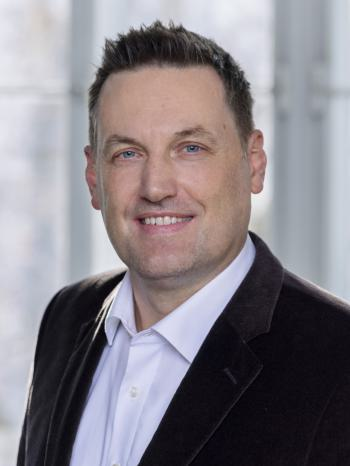
Wulf Haubensak is Professor and Head of the Department of Neuronal Cell Biology at the Center for Brain Research, Medical University of Vienna, where he leads research in affective neuroscience. He also serves as an Adjunct Investigator at the Institute of Molecular Pathology and is a member of the steering committee of the FWF Cluster for Neuronal Circuit in Health and Disease. His research combines viral genetics, optogenetics, electrophysiology, advanced imaging, fMRI, behavioral neuroscience, and brain data science to investigate how cortico-limbic circuits generate emotional memories and affective responses. His group also studies how genetic and environmental factors shape affective traits, psychiatric conditions, and evolution. He received his diploma in biochemistry from the University of Bochum and his PhD in neurobiology from the University of Heidelberg. Before establishing his research group in Vienna, he worked at the Max Planck Institute for Cell Biology and Genetics and the California Institute of Technology. He received support from HFSP, the Max Planck Society, the Young Academy of the ÖAW, ERC, FWF, and Boehringer Ingelheim.
Affiliation: Medical University of Vienna
Homepage: https://hirnforschung.meduniwien.ac.at/unsere-abteilungen/abteilung-fuerneuronale-zellbiologie