
Lecturer: Lilian Weber
Fields: Cognitive Computational Neuroscience, Cognitive Modelling
Content
We will learn how to build, simulate and test Bayesian models of how humans learn and make clever decisions in changing environments. Each session will start with a short lecture and then move into a practical tutorial using notebooks and actual datasets.
Session 1: Predictive coding as approximately Bayes-optimal inference: computation, algorithm, implementation
Session 2: The generalised hierarchical Gaussian filter (gHGF): learning and inference in changing environments
Session 3: The interoceptive basis of reinforcement learning: extending RL to incorporate inference on internal states
Alternative Session 3: The gHGF as a deep neural network: why and when predictive coding architectures outperform classical ANNs
Literature
- Baskakovs, A., Estebe, S., Enevoldsen, K., Nielbo, K., Mathys, C., & Legrand, N. (2026). Closed-form predictive coding via hierarchical Gaussian filters (arXiv:2605.20293). arXiv. https://doi.org/10.48550/arXiv.2605.20293
- Bogacz, R. (2017). A tutorial on the free-energy framework for modelling perception and learning. Journal of Mathematical Psychology, 76, 198–211. https://doi.org/10.1016/j.jmp.2015.11.003
- Dulberg, Z., Dubey, R., Berwian, I. M., & Cohen, J. D. (2023). Having multiple selves helps learning agents explore and adapt in complex changing worlds. Proceedings of the National Academy of Sciences, 120(28), e2221180120. https://doi.org/10.1073/pnas.2221180120
- Mathys, C. (2011). A Bayesian foundation for individual learning under uncertainty. Frontiers in Human Neuroscience, 5. https://doi.org/10.3389/fnhum.2011.00039
- Rao, R. P. N., & Ballard, D. H. (1999). Predictive Coding in the visual cortex: A functional interpretation of some extra-classical receptive-field effects. Nature Neuroscience, 2(1), 79–87.
- Song, Y., Millidge, B., Salvatori, T., Lukasiewicz, T., Xu, Z., & Bogacz, R. (2024). Inferring neural activity before plasticity as a foundation for learning beyond backpropagation. Nature Neuroscience, 1–11. https://doi.org/10.1038/s41593-023-01514-1
- Weber, L. A., Waade, P. T., Legrand, N., Møller, A. H., Stephan, K. E., & Mathys, C. (2026). The generalized Hierarchical Gaussian Filter. https://doi.org/10.7554/eLife.110174.1
- Weber, L. A., Yee, D. M., Small, D. M., & Petzschner, F. H. (2025). The interoceptive origin of reinforcement learning. Trends in Cognitive Sciences, 29(9), 840–854. https://doi.org/10.1016/j.tics.2025.05.008
Lecturer
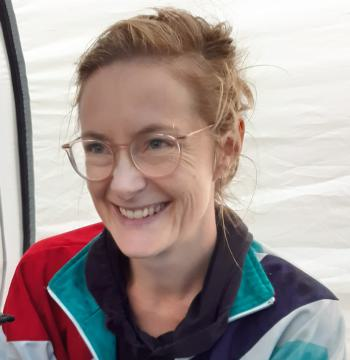
Lilian is a professor for cognitive modelling at the Institute for Cognitive Science at Osnabrück University in Germany. After studying psychology and physics, she did a PhD in Translational Neuromodelling at ETH Zurich, followed by postdoctoral years at the University of Oxford. She is interested in how we flexibly adapt our cognitive strategies to changes in our internal and external circumstances. To study the neuro-cognitive mechanisms underlying this flexibility, she uses a combination of modelling (Baysian inference and RL), measuring (behaviour and EEG) and interfering with brain function (via pharmacology and transcranial focussed ultrasound neuromodulation).
Affiliation: Institut für Kognitionswissenschaften, Universität Osnabrück
Homepage: mic-lab.de